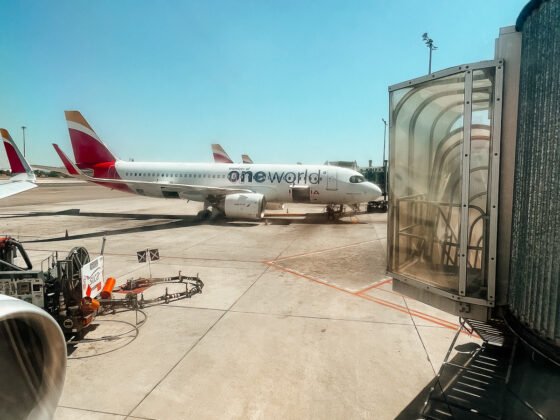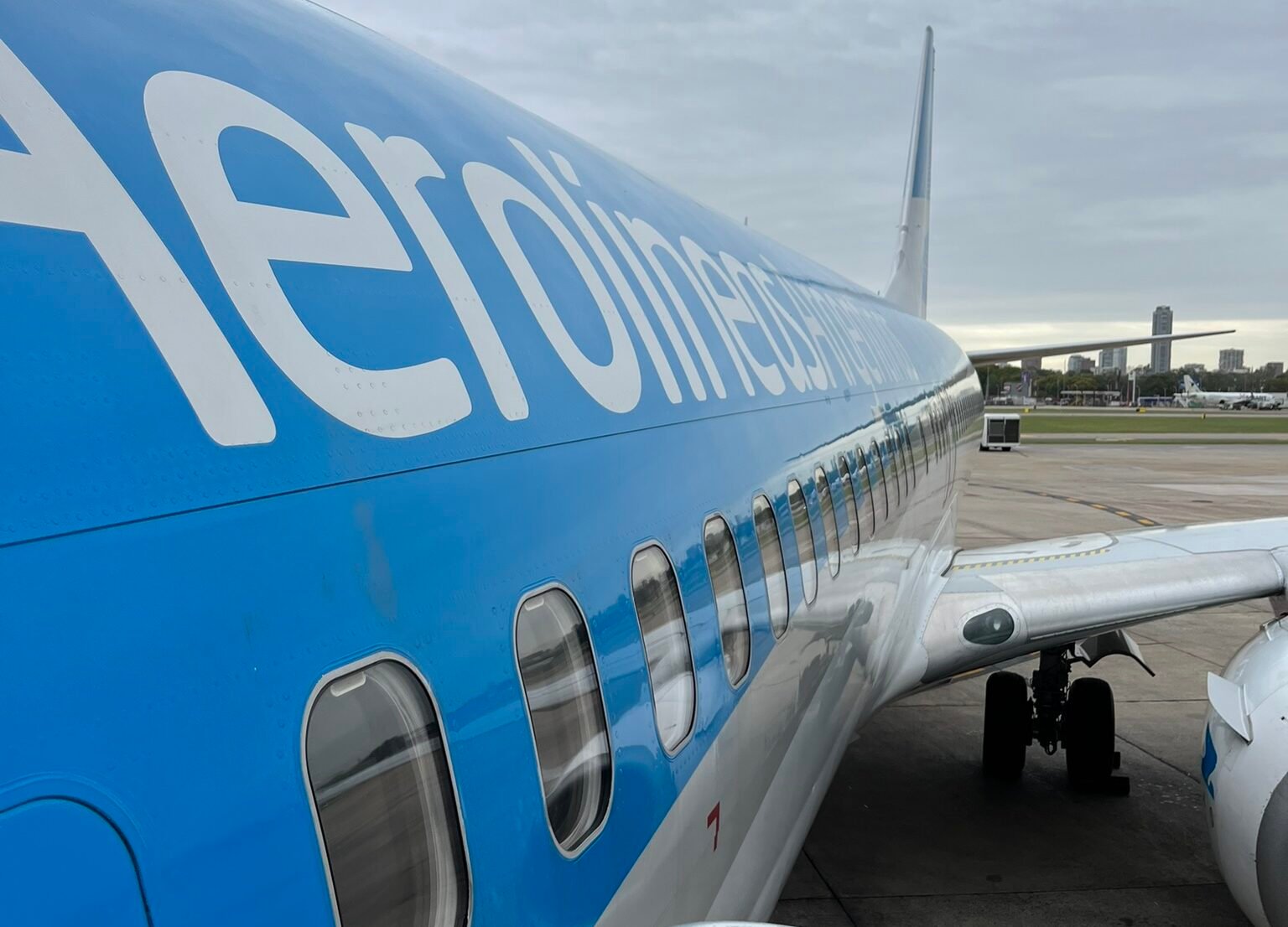
Argentina is the eighth biggest country in the world, and if you want to explore further afield than Buenos Aires, flying is by far the best way to do it. Domestically, there are three main players – Aerolineas Argentinas, Flybondi and JetSmart. Having now flown dozens of times domestically within Argentina, and experiencing many ups and downs along the way, this article aims to share some of my tips and advice.
On the whole and with good planning and research beforehand, flying domestically in Argentina is a straightforward experience. Airports tend to be well organised and easy to navigate, there are plenty of daily services to the most in-demand destinations, and domestic flight prices tend to be accessible.
If you don’t speak Spanish, you shouldn’t have any problems. Announcements on domestic flights tend to be bilingual and cabin crew generally have a good grasp of English.
The Three Main Players: Which Airline to Choose for Domestic Flights in Argentina?
The Argentinean aviation market transformed a lot during the covid period. LATAM (South America’s largest airline) withdrew from the domestic market and Norwegian was purchased by JetSmart. There has been talk of LATAM re-entering the domestic market. At the end of 2025 they were given authorisation to operate domestic flights in Argentina again. As of April 2026 though, LATAM only offer international flights from Argentina.
Aerolineas Argentinas
Aerolineas Argentinas is the flag carrier of Argentina. As well as international flights to Latin America, Europe and the United States, they offer the largest domestic network in Argentina. Their two main hubs are Aeroparque and Ezeiza.
Pros
- Generally very reliable. They have the biggest domestic fleet in Argentina by far (over 60 short-haul aircraft). This means as well as having a more regular schedule and a larger network, they’re better positioned to respond to irops and resolve issues.
- Full-service carrier. On domestic flights they offer two different options – premium economy (2-2 configuration with wider seats), and economy. I’ve previously reviewed my experience in domestic economy. I don’t think premium economy is worth it, unless the price difference is small. In economy, expect a small snack as well as a choice of soft drinks.
- Part of SkyTeam. If you have Elite or Elite Plus with SkyTeam (e.g. through Virgin Atlantic or Delta), you can enjoy additional benefits such as extra baggage allowance and priority check-in. You can also earn miles from your Aerolineas Argentinas flights.
Cons
- Where competition exists, Aerolineas Argentinas are typically (but not always) the most expensive option. To compete with their low-cost rivals, their cheapest economy ‘light’ fares do not include checked baggage. Make sure to double-check your ticket type to confirm your allowance. With SkyTeam Elite or Elite Plus you can take one checked bag, even on the cheapest ‘light’ fare.
- They often change their schedule. Normally, the changes are only minor (slightly modifying departure time) but it can be annoying.
- If you have SkyTeam status, benefits consistency can vary. It’s not uncommon for the business class / priority check-in desks to be unstaffed, and while my luggage is normally delivered fairly quickly, priority baggage handling is inconsistent.
- No lounge provision for domestic flights.
Recommended? Yes. Aerolineas Argentinas are my preferred option. I’ve flown with them numerous times and have had good experiences overall.
JetSmart
JetSmart originated in Chile, but they now have a significant network in Argentina, Colombia and Peru. They’re controlled by the US Investment Fund Indigo Partners. Indigo Partners also happen to also control Wizz Air in Europe, Volaris in Mexico and Frontier in the USA, which perhaps gives you an idea of where JetSmart is positioned. JetSmart also operate from both Aeroparque and Ezeiza in Buenos Aires.
Pros
- JetSmart often offer some very cheap headline ticket prices. This is particularly true if you’re able to book at least two or three months in advance,
- Usually fairly reliable. They don’t have a bad reputation for frequent delays or cancellations.
- While not part of an alliance, JetSmart do have a limited partnership with American Airlines. As well as a codeshare agreement, you can earn AAdvantage miles when you fly with JetSmart (except on ‘Basic’ fares).
Cons
- Operates a ‘low-cost’ model. Reserved seating, bags, and refreshments onboard all cost extra. Once any extras are purchased, prices can very quickly inflate.
- The cheapest fares are usually for flights departing at horrible times of the day – particularly before 7am.
Recommended? If you’re able to find a cheap fare, even once you’ve added on any extras you need, they can be worth considering if the schedule works for you.
Flybondi
Flybondi are an Argentinean airline founded in 2016. ‘Bondi’ is a casual word in Argentina for bus – and like JetSmart, Flybondi is a budget carrier. In general, I do not recommend using Flybondi. This is based both on my own personal experience, as well as their terrible reputation in the local media.
Pros
- Often the cheapest option available. They offer some very cheap headline fares.
Cons
- Awful reputation for disruptions and cancellations. I have stopped using Flybondi after my last flight with them was delayed by over 8 hours. Zero communication or assistance. They’ve hit the headlines again recently for failing to pay their staff, leading to the possibility of yet more disruption.
- As with JetSmart, reserved seating, bags and refreshments onboard all cost extra and aren’t included as standard. If you do use Flybondi, make sure to check-in online prior to your flight. If you forget, Flybondi will charge an additional fee for issuing your boarding pass.
Recommended? No. Risking wasting hours due to disruptions and having less time to explore your destination isn’t worth the hassle, even if it is a very cheap deal.
Buenos Aires: Which Airport – Ezeiza or Aeroparque?
Buenos Aires is served by two international airports. If you’re travelling to Argentina from Europe or North America, you’ll arrive into Ezeiza. If you’re arriving into Argentina from South America, most flights now use Aeroparque, although some routes continue to operate into Ezieza too. Although domestic flights use both airports, Aeroparque is the dominant player by far.
Ezeiza International Airport (EZE)
Ezeiza is located 32km from the city centre. There are effectively two terminals. The international departures terminal was inaugurated in 2023. It’s a modern space with everything you’d expect from Argentina’s largest international airport. The domestic terminal is rather more underwhelming. This will hopefully change soon though as expansion works are currently underway. These will result in additional gates and the opening of a lounge (there is currently no business lounge, or Priority Pass option for domestic flights).
For now though, the domestic departures experience isn’t great. The domestic terminal is basic and has limited facilities. While everything operates perfectly fine, it’s a no-frills experience. Unless you’re flying into Ezeiza and connecting to somewhere else in Argentina on a same-day itinerary, I’d highly recommend using Aeroparque for domestic flights from Buenos Aires instead.
Journey times from the city centre to Ezeiza vary. From late evening into the early morning it takes around 30 – 45 minutes to reach the airport from the Palermo, Recoleta or Microcentro neighbourhoods by car. During the day, and especially during peak periods, you should allow 2 hours to reach the airport. You’ll probably make it before, but I’ve had some tense moments wondering whether I’ll make it in time because of traffic jams – so I’d always recommend allowing 2 hours to get there, especially during peak times of the day.
Getting to the City:
Both Uber and Cabify work for transfers from Ezeiza to the centre of Buenos Aires and I recommend these over a taxi. Prices vary, but in general, expect to pay around $40,000 Argentine Peso (approx $30 / £22 / €25). . The only direct public transportation option to the centre is the León bus which costs 15,000 Argentine Peso as of April 2026 (approx $11 / £8 / €9).
Aeroparque Jorge Newberry (AEP)
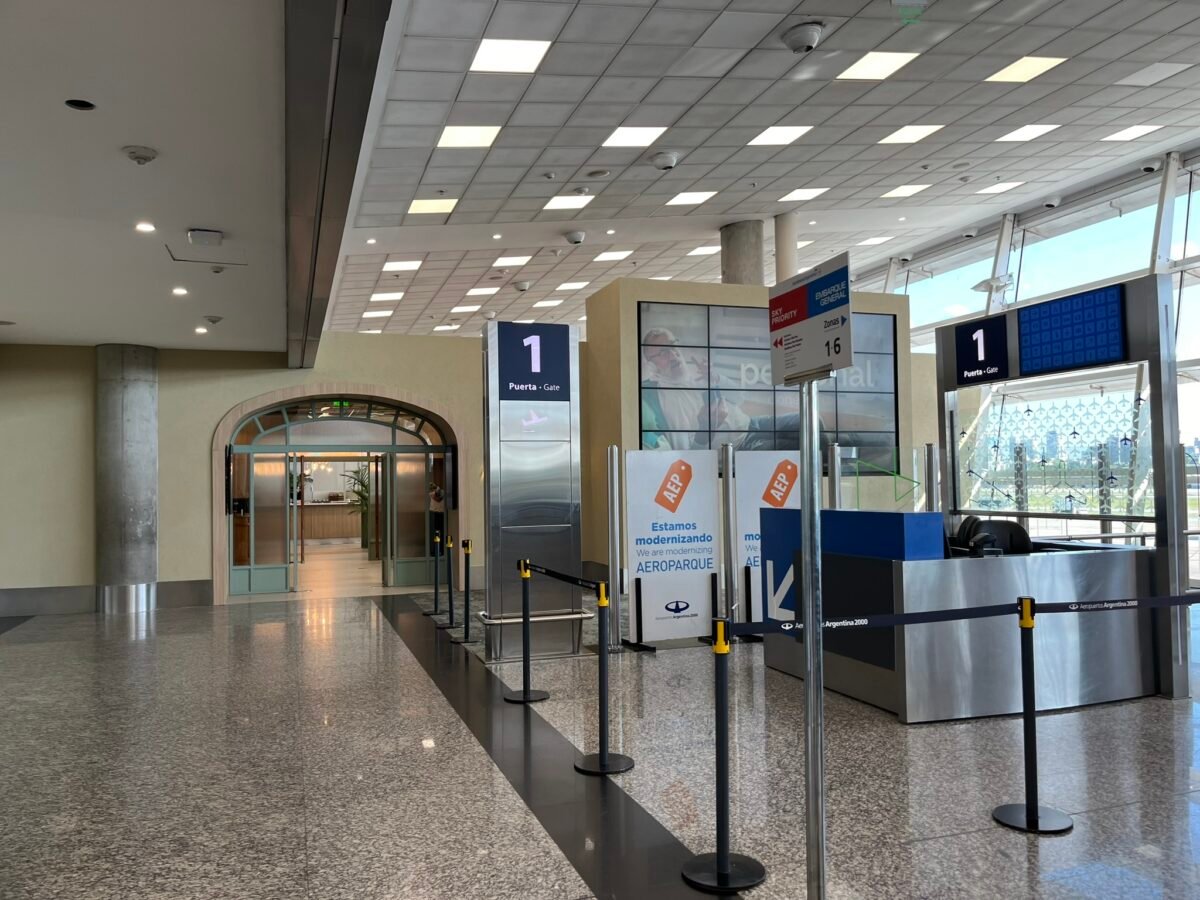
Aeroparque is a true city centre airport. It’s far smaller than Ezeiza and handles most of the city’s domestic flights. It also handles an increasing number of options within South America too. It’s not an airport designed for long stays – you wouldn’t want to be spending hours here waiting for your flight – but due to its central location, you can plan to arrive 90 minutes (without checked bags) or 2 hours (with checked bags) before for domestic flights and still have time to navigate through the various formalities comfortably.
Aeroparque can feel crowded because it handles a lot of flights using a space that feels about half as big as it should be. Of course, this is the trade-off for its super convenient location, but don’t expect a huge amount of things to do, or a quiet place to sit. There is a lounge which is open to both Priority Pass and Dragon Pass. I’ve previously reviewed the lounge if you’re interested to know more.
Getting to the City:
Travel time will vary depending on where you’re staying in the city. Assuming you’re based in the Belgrano, Palermo, Recoleta or Microcentro neighbourhoods it shouldn’t take more than around 30 minutes by car. Buses (colectivos) operate various routes to Aeroparque, but I’d generally recommend Uber or Cabify. From the neighbourhoods above, expect to pay around 15,000 Argentine Peso as of April 2026 (approx $11 / £8 / €9).
How to Get From Ezeiza to Aeroparque Jorge Newberry
If you’re arriving into Argentina through Ezeiza, I’d highly recommend spending at least a couple of nights in Buenos Aires at the start of your trip. In general, I would try and avoid any same-day connections which involve changing airport. Of course, it’s more than possible to travel between the two, but you should allow at least 2 hours for the journey between Ezeiza International and Aeroparque Jorge Newberry.
If you do need to connect between the two airports, you can choose between a direct bus with León or opt for a taxi or ridesharing app. As of April 2026, the direct bus between the two costs $15,500 Argentine Peso. Alternatively, expect an Uber or Cabify to cost around $40,000 Argentine Peso (approx $30 / £22 / €25).
Airports Outside of Buenos Aires: What to Expect
My experience using various airports across Argentina has largely been positive. While typically small, airports tend to operate efficiently. As with Aeroparque, I’d recommend arriving at least 90 minutes before if you’re travelling without bags, or 2 hours before if you’re travelling with checked bags.
If you have a Priority Pass or Dragon Pass, most of Argentina’s bigger airports have a lounge available. While not always the case, it isn’t unusual for these lounges to be located landside before clearing security. Security tends to be quick, so it’s not a huge problem. In addition to the Aeroparque lounge I referenced above, I’ve also reviewed the options in Mendoza and Bariloche.
If you’re considering planning a trip to Mendoza, I recommend taking a look at my 2026 Mendoza Travel Guide for some useful tips and ideas!
Tips & Tricks for Domestic Flights in Argentina:
Baggage
As above, the cheapest fares typically do not include checked baggage, regardless of airline. With Aerolineas Argentinas you can take a small suitcase onboard as part of your hand luggage allowance as well as a small backpack. With both JetSmart and Flybondi, only a small backpack is included with the cheapest fare. Both JetSmart and Flybondi tend to enforce their baggage policies at the gate. I’d recommend adhering to them to avoid any unexpected charges.
There are no liquid restrictions or 100ml rule for domestic flights within Argentina. As long as any liquids fall into your baggage allowance, you can take them onboard with you.
Fun fact: If you’re flying with Aerolineas Argentinas from Mendoza, you’re allowed to take a box of up to 6 bottles of wine onboard with you. This is in addition to your standard allowance.
Booking
I tend to use Google Flights when I’m researching domestic flights in Argentina. Prices can fluctuate at short notice, so if you find a fare you’re happy with, I’d recommend booking at least 2 months in advance if you’re able.
Aerolineas Argentinas, JetSmart and Flybondi have English versions of their website – and I’d generally suggest booking directly.
Delays & Cancellations
With the exception of Flybondi, domestic flights in Argentina typically operate without problem. Argentina doesn’t have its own equivalent of EU261. While you’re entitled to a refund if the airline cancels your flight, outside of this, things can be more difficult. Holding valid travel insurance is mandatory if you’re visiting Argentina anyway, but I highly recommend choosing a travel insurance plan that provides good coverage in the event of flight delays.
Based on my own experience, Aerolineas Argentinas are fine to deal with during periods of disruption or flight changes. Recently, they changed the time of one of my future flights and switched the airport from Aeroparque to Ezeiza. I was able to use this to my advantage. Aerolineas were very flexible and allowed me to change the date of my flight (I wanted to shorten my trip) without charge, and put me back on a flight from Aeroparque.
Points & Loyalty Schemes
As mentioned above, Aerolineas is a member of SkyTeam, while JetSmart allows you to earn points with American Airlines.
If you have points with a SkyTeam airline, you should be able to use your points to redeem domestic flights with Aerolineas Argentinas. It can sometimes be tricky finding availability – but it does exist. For example, booking using Air France Flying Blue points from Buenos Aires to Mendoza costs 7,500 points plus $9.90 one-way.
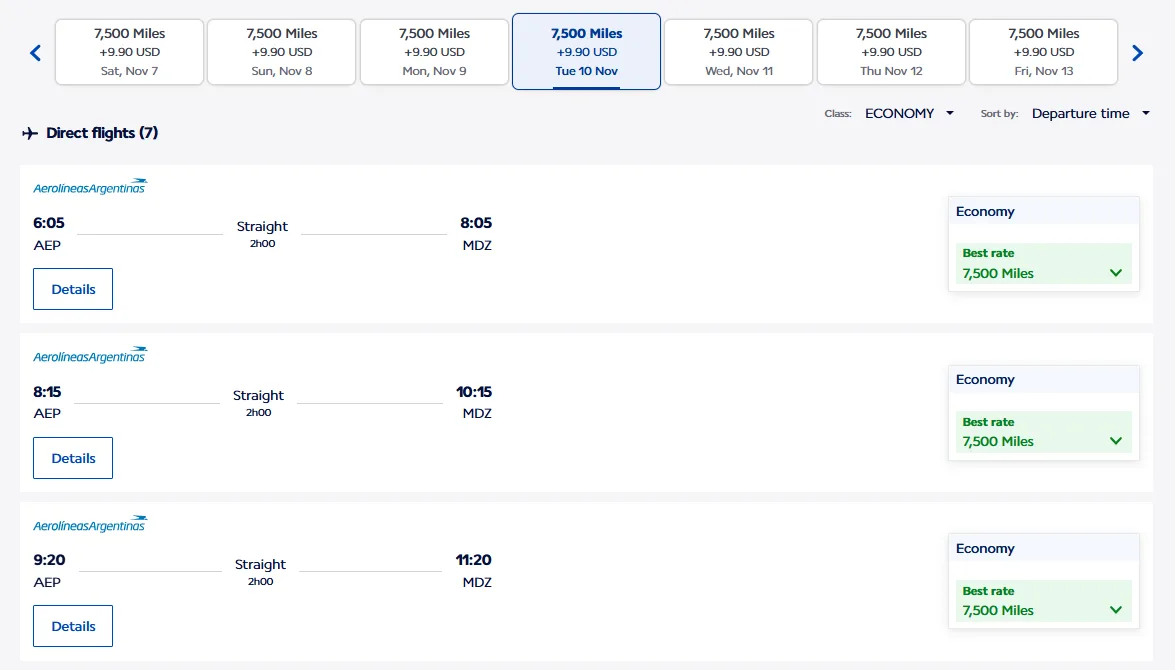
Typically, I credit my Aerolineas Argentinas flights to Air Europa. I haven’t had any problems – flight usually post automatically within three or four days. I’ve also credited to Delta in the past, which was also a smooth experience.
While I haven’t tested it out personally, you can use your American Airlines AAdvantage miles to redeem flights with JetSmart. This can either be done through the American Airlines website, or the JetSmart website. For example a flight from Buenos Aires to Bariloche costs 3,000 miles.